The Gutor Yak-Zang Cham
དགུ་གཏོར་གཡག་བཟང་།
The 29th day of the 12th Tibetan month; the Gregorian date moves each year.
What happens
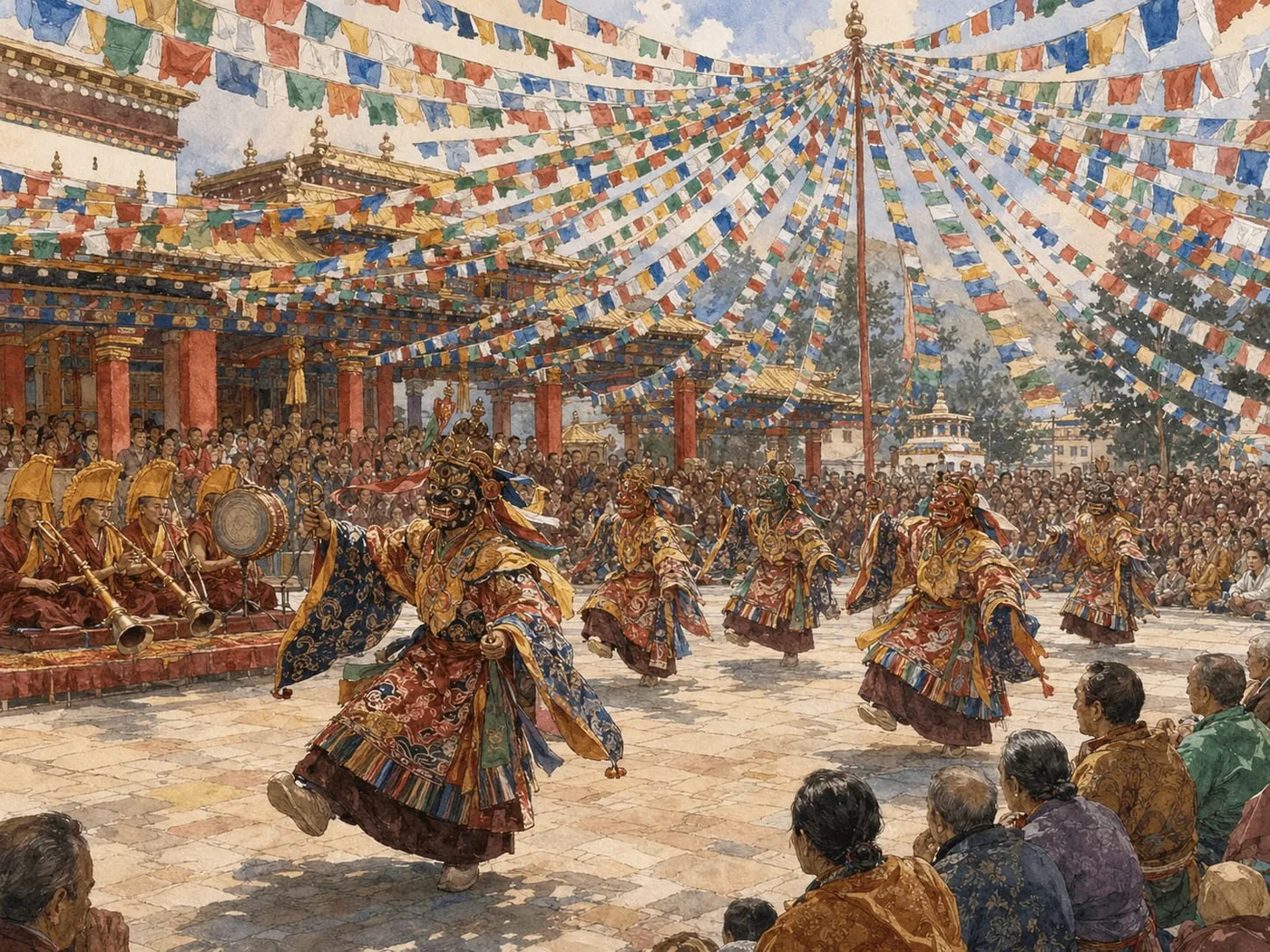
For several hours the courtyard belongs to the dancers. Monks in brocade and carved masks move through set sequences to drum, cymbal and the long dungchen horns, each figure holding a position that the dance states rather than describes. At the centre of the ceremony an oversized yak becomes Vajrabhairava.
Afterwards come the closing rites, including the hurling of the Gutor torma — a sculpted offering carried out of the monastery and destroyed, taking the year’s accumulated harm with it.
Why it is done
Gutor means “the offering of the 29th”. Across Tibet the last days of the year are given to clearing what the departing year accumulated, so that the new one begins unencumbered. The monastery performs this as a thanksgiving to the Dharmapalas and a prayer for the year ahead: long life, health, prosperity, and peace in the world.
The dance is not a performance about a belief. It is the belief carried out with the body — which is why it takes years to learn and cannot be hurried.
Why the yak
This is Dzongkar Choede’s own dance rather than a general Tibetan form, and it carries the monastery’s own history. Six centuries ago Lachen Chöpal Zangpo saw his meditational deity Vajrabhairava appear to him in the form of a yak, and instituted the dance to mark it. The yak at the centre of the ceremony is that vision, performed again every year since.
What to know if you come
The dancers train from about thirteen, and for years they train in ordinary robes rather than costume. What they are learning in that time is not choreography: it is what each movement means, and what holding it requires.
This description is a draft, awaiting review by the monastery.