

The Flame Not Passed
August 14, 2026
He abused me, he struck me, he defeated me, he robbed me. The Dhammapada opens by simply quoting the sentence, before saying anything about it — four grievances in the order a person actually thinks them, each one true, each one still being carried.
In those who hold this, the verse says, hatred does not come to rest. In those who set it down, it comes to rest.
And then the line the tradition has repeated for two thousand years: hatred is never appeased by hatred. It is appeased by its opposite. This is the ancient law.
It is worth being careful about what that does and does not say. It is not a claim that the injury was small, or imagined, or that the person who did it should be left alone. Harm can require answering. Someone may need protecting, and accounts may need settling in the ordinary human ways — through justice, which is not the same thing as hatred, though the two arrive holding hands and are easy to confuse.
The verse is about a different question: what the injury is permitted to make of you.
Because hatred does offer a deal. It says: hold me long enough, and at the end of it you will feel better. Give me your evenings and your conversations and the argument you keep rehearsing, and I will eventually hand you peace. Anyone who has taken that deal knows the payment does not come. The fire is passed hand to hand, and each pair of hands is burned in the passing, and there is no final pair.
We do the same thing today in families that have not spoken in eleven years, in the reply that must be answered, in the small daily arithmetic of who owes what.
You may never get an apology. You may not get to reconcile. Pursue what justice you can.
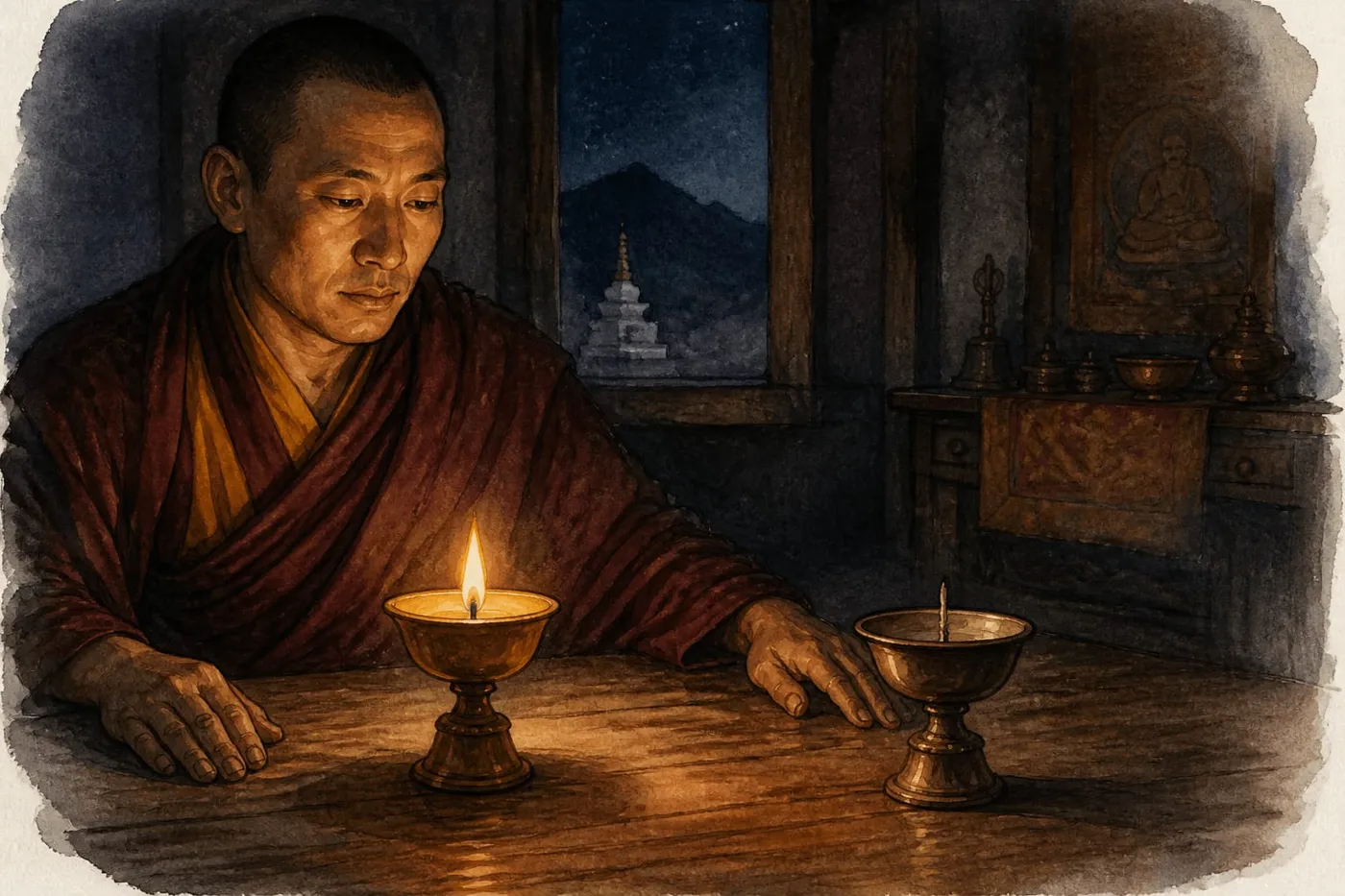
But do not carry the flame to the next lamp.
What they did will not decide who you become.
Explore further: Compassion in Practice · Compassion Requires Wisdom