

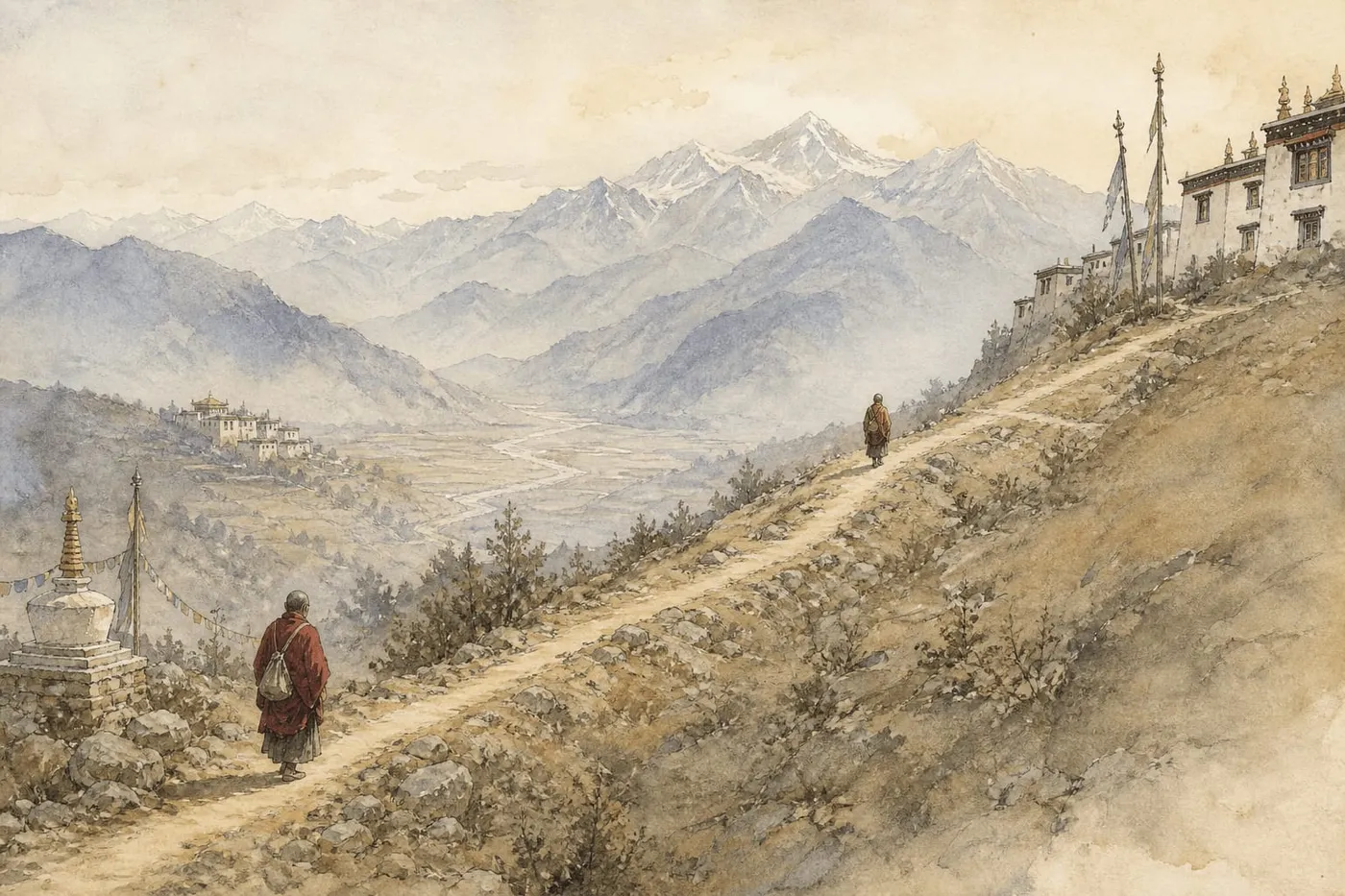
Two Figures
July 31, 2026
When Atisha came from India to teach in Tibet, he is said to have brought his cook with him — a Bengali servant with a famously difficult temperament, sour, insolent, hard to be around. The Tibetans, who revered Atisha, offered to take the work off his hands. They had excellent cooks. There was no need for him to endure this man.
Atisha declined. He said, in the version the Kadampa masters passed down, that he had not brought the cook for the cooking. He had brought him because without him he had no one to practise patience on.
The lineage that came out of this made the point a slogan: the difficult person is not an obstacle to the practice. They are the equipment. Anyone can maintain a boundless heart toward those who are easy to love — the metta sutta asks for the care a mother gives her only child, extended without limit, and the limit is exactly where the practice starts.
We do the same thing today when a particular name appears on the screen and something tightens before the message is even open. They are selfish. They take credit. They are impossible in meetings. You may be completely right about all of it — none of this requires deciding you were wrong.
It asks something harder than that. Can you refuse the behaviour without shrinking the person down until they are nothing but the behaviour? Because that reduction is not done to them; they never notice. It is done inside your own mind, where you have to live.
They want to be happy. They dread humiliation. They are carrying something you cannot see.
None of which excuses anything. It only stops their conduct from setting the terms in your own head.
So say no when no is right. Leave when leaving is right.
But go without the hatred. Compassion still has a backbone.
Explore further: Community & Daily Life · Compassion Requires Wisdom